Sunday, August 28, 2011

Peggy Frew on writing and motherhood

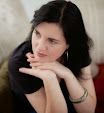
A member of my writing group, Peggy Frew, is about to publish her first novel, House of Sticks (Scribe), which won the 2010 Premier's Award for an Unpublished Manuscript. I have known for years that Peggy is a writer to watch, and so it's very exciting to see her getting the attention she deserves -- and this is just the beginning...

If you read this blog because you are interested in mothering and art, then you have to read House of Sticks, a novel that wades into this territory with great insight and honesty. And if you want to know more about Peggy and her work, look out for my profile piece in an upcoming edition of The Big Issue (September).

For a taste of just what a brilliant writer Peggy is, you can read one of her short stories in the current fiction edition of The Big Issue magazine. I got hold of a copy yesterday at the Melbourne Writers Festival, and (from what I've read so far) it's packed with great stories.

Without wanting to steal the article's thunder, there were some chunks of the interview I did with Peggy that didn't make the final cut. Inevitably we spoke about writing and motherhood in detail that might leave the average reader cold, so much of that got left out of the article. Instead, you can read those bits here:

What Peggy Frew said:
Somebody who read the book, a published author themselves, wrote me this email saying writing any novel takes such determination and dogged hard work but, in the case of House of Sticks, it also takes courage.

It's not like it's a memoir where it's all about the bravado of exposing your own dark life or something. I think people think it's brave because ... it's taking a subject that a lot of people wouldn't think is worth writing about. It was what I was compelled to write about; I didn’t think strategically at all. You do connect with what's going on at your life at the time. I didn't set out to be brave or controversial; I just wrote it because the characters and the scenario came to me.


Almost everybody lives in a home, a lot of people have children, so how can it not be a valid subject to write about? Family is a key matter for a lot of writers. But it's the mother and baby thing that mean people put it in that pigeonhole. Now I'm a bit worried it's not going to be taken seriously because it's "only" about motherhood. Fortunately, my next book is far removed from that.

The initial urge [to write] is really unfocused usually. It's almost like a bodily urge, really, like a need to eat or something. But with working on a novel then it very quickly moves beyond that and it actually becomes a slog; I have to shape that initial outpouring into something. And then you have to commit to it and it becomes a task that you don't necessarily feel compelled to do at all. It's like that Dorothy Parker quote: "I hate writing, but I love having written."

If the book's there and you want to write it, you have to. There is definitely room to be a mother and make art. The main reason for me to keep writing is that I’d be a less happy person if I wasn't and therefore a worse mother.

Once you've had a child, you have to live with a sense of responsibility and therefore hope. You can’t just be selfish and you can't just give up on the world. It hasn't stopped me from confronting horrors, but my children are still really young. I haven’t had to justify anything about what I’m doing yet.

I recently read The Slap, and there’s this really great bit in that where a character talks about a friend who has this theory that there are three genders: men, women who have had children, and women without children. So men stay the same, while women are almost two different species. I thought that was really interesting. Though I think having children does change men as well.

I heard an American author on [Radio National's] The Book Show and he was a doctor who had become a writer of fiction and he talked a lot about working in hospitals. In the middle of this interview that was quite kind of high-brow, he said, "I feel like there's one thing that changes your life and that's having children. I feel like that's changed me profoundly and I'll never see the world the same way again." It was almost jarring when he said it. I totally didn't expect him to say something like that because men so rarely mention those things.

I’ve never had anything but support from my family. I think the fact that Mick [Turner, Peggy's partner] is a painter and musician himself means that he has respect for art and he understands that what you produce -- of course it's tied to you and who you are. And there are elements to that book that are based on real experiences and real feelings. But I think probably because he's done it himself, Mick understands that when you take real experience and make it into art, you do fictionalise it. You take a moment in which you felt a particular way, and you inflate it and heighten the drama, and explode it out into a huge story. There's a kernel of truth that relates to your real life, but it doesn't mean that the big story is real life. I think he just gets that. Well, fingers crossed he does, because we could be in big trouble otherwise.

We're both really productive. I imagine it would be really rough if one of you was going great guns and the other was dealing with writer's block or whatever. But we haven't had to deal with that yet.

In the book, [main character] Bonnie idealises Mickey [a musician and free spirit]. She is Bonnie's opposite. She's the living myth. It doesn't matter who you are, everyone has someone like that in their life, the people you idealise. I know I do with other mothers. In the school playground you see those other mothers who look really relaxed and calm and their like life is together and they're really well dressed and their kids seem really well behaved. You feel like they're somehow living this other life.

Parenting's like anything else — some people are just really good at it. My biggest issue as parent is containing my own frustration.

I've got one day a week [to write]. Otherwise, I write in small spurts — evenings, maybe twenty minutes in an afternoon if [third child] Fraser goes to sleep. And on the weekend I might lock myself in a room for an hour.

When I went on that writers' retreat I had six whole days and I wrote about 7000 words. That's comparable to what I’d write at home if I was really in to something and writing every night. It was just that [at the retreat] I had lots of time to go on walks in between and I felt really refreshed and relaxed, but the actual output that wasn't that different.

I’ve been so much more productive since I had children than I was before, but that could just be a maturity thing. ... I was really lost in my twenties. It [having a family] has worked really well for me. I wouldn't change anything at the moment about my writing practice. Actually, I would change something: I would love to have, say, two hours every mid-morning when I just went in to my study alone. But I wouldn't want to go into an office every day and write all day.

Wednesday, August 17, 2011

Life and reading, reading and life


I was honoured to be among those approached by author/publisher/blogger Karen Andrews, aka Miscellaneous Mum, to contribute a spiel about the most life-changing book I’ve read in the past ten years.

If I'd know the company would be so illustrious I might have tried a bit harder! The result is a wonderfully varied list of books that is about to become the pile on the desert island that is my bedside table.

I have always been a big fiction reader. Apart from books read for study or research, I can probably count the number of non-fiction books I've read "for pleasure" on one hand. (OK, maybe one hand plus a foot or two.)

Most of what I know about art, politics, religion, human nature -- if not learnt through living -- I've learnt from novels. What I love about fiction is the depth of insight you can gain about what it was like to be a human being alive in a certain place, at a certain point in time. And I suppose being partial to a domestic drama, no-one can plumb the nature of relationships and family life like fiction.

As I mentioned to Karen, I have been forced to recognise that the books which really resonate with me tend to reflect or deepen my understanding of my own experience, as opposed to taking me into totally other worlds. Even as a child, I recall being slightly suspect of books in which animals talked!

I have often worried that this is a limitation of mine. But lately I've decided to just sit with the fact that there is something in these stories that I still need: that is feeding me. And I expect that one day this need will be expelled and I will feel ready to open myself to less familiar territory. A kind of graduation from the internal to the external perhaps.

My theory is that all writers exist on a spectrum that runs between pure observation and pure imagination. When author/artist Antoni Jach recently put this idea to a masterclass I'm involved with, I was surprised that most put themselves at the imagination end. Me: I confessed to being about 80% observation and 20% exaggeration (by which I really mean embellishment).

Interestingly, the list of books on Karen's blog is about half-half, when it comes to fiction versus non-fiction (not that it's a competition -- especially nowadays). But either way, all evidence that books really do change lives is fascinating, and heartening, stuff.

Wednesday, August 3, 2011

A few absurd things that happened to me last week…


Monday: Very, very nearly got hit by one of those 300-tonne skateboarding rhinos while riding to work. Who could have known that there would be a second tram directly behind the one that had just passed me?!

Tuesday: Had 10 minutes to woof down my lunch and (ideally) read my book while sitting in the car. Spent entire 10 minutes trying to find the page I was up to.

Wednesday: Had a very efficient 15 minutes with my accountant doing my tax return. Just long enough for some fucker in a truck to back into my car in the laneway outside. And drive off!

Wednesday (2): Got the times of my children’s parent-teacher interviews mixed around — hence, managed to miss both of them.

Thursday: Took four little girls to the first ballet class of the semester… (each week I pick up said four girls from school at 3.30pm, change said four little girls into complicated ballet outfits, shove said four girls into ballet studio by 4pm, spend next half an hour trying to sort out whose school uniform was whose)… only to realise that I had forgotten to enrol my own child. She and I went and had a hot chocolate.

Friday: Literally wasted half an hour ransacking the house searching for my favourite coat, only to realise my partner had put it away in the cupboard. Of all places! Sheesh…

Hmm, think riding a bike might require clarity and focus. Hell, think life might require clarity and focus.

Sorry for the silly post... Will try for something more profound next time.

Wednesday, July 20, 2011

On synchronicity and my man turning 40...


When I was 22, my friend Katie and I saw a terrace house to rent in North Fitzroy, across the road from Edinburgh Gardens. It was the stuff of our dreams.

We were determined and strategic -- rather than wait for the inspection date, we decided to knock on the door and attempt to ingratiate ourselves with whoever was inside.

As we approached the front door, dressed to impress in our cobbled-together faux office-worker outfits (I seem to recall that I was wearing a white suit of all things!), we caught sight of someone familiar sitting on the internal stairs of the adjoining terrace. He was leaning against the wall, talking on the phone with his feet up on the banister.

I had met him once before, a few years earlier, at the Uni Bar in Canberra, where we had both grown up. At the time I had decided he was an arrogant prick and had been harbouring a rather too intent dislike for him ever since. Funny how strong feelings sometimes have to go one or the other.

The tenant set to move out of the house Katie and I wanted to rent happened to be playwright Hannie Rayson. As a VCA graduate, she took pity on two entirely transparent young art students searching for a house to rent and recommended us to the landlord.

The rest, shall we say, is history...

(Left: The kids I ended up having with that not so arrogant after all and in fact rather delicious man living next door.)

Yesterday that man on the staircase turned 40, and I was privileged to wake up next to him for the I-don't-know-how-many-hundreth time.

Not a bad way to spend a life.

(And many years later, just to come full circle, the darling Hannie Rayson launched The Divided Heart. If only I had a recording of her incredible speech! Does anyone remember it? I was too nervous to really take it in but I do remember that she was brilliant and hilarious.)

Thursday, July 7, 2011

Ellis unleashes his "wowser-feminism" conspiracy theory


This ludicrous article from Bob Ellis is barely worthy of comment, really. Except I, along with hundred of others, can’t help myself.

Clearly The Drum saw it as an easy means of courting controversy and therefore traffic to its site. And on that front it worked, inspiring a huge reaction.

Ellis has created his own unique conspiracy theory that “sexual complaint” is “being used to bring down left-leaning and Liberal-reformist artists and politicians”.

According to Ellis, so-called “wowser-feminism” has gone too far in its agenda to kill off the Left — the “Strauss-Kahn Moment” being the final straw.

Note: “left-leaning” is a very broad category in Ellis's book. It seems all artists and politicians cut down by scheming women conveniently morph in to "left-leaning" types once aligned against a common enemy: the wowser-feminist.

I mean, what has the world come to? When did it become legit for women to ruin the blokey fun of Ellis and his mates?

After all, it wasn't that long ago that you were allowed to come on to your secretary at the office Christmas party and it was all a bit of a lark. Hell, in some countries it’s still the done thing to “deflower” the 12-year-olds in your village.

And paedophilia is only a bit worse than schoolyard bullying, isn't it? Playwrights and filmmakers have raped the youngsters in their acting troupe for centuries. It was all in the name of Art, for god’s sake.

Ellis seems to be suggesting that sexually predatory behaviour is just a by-product of creative genius or political brilliance. That we should ignore the crimes of important figures if outweighed by their cultural contribution.

This article is absurd on so many levels. It's all very well to say that some matters are private issues that should not bring into question someone’s ability to do their job; another thing altogether to say we should avoid making people accountable for their blatant abuse of power, breach of responsibilities or, indeed, criminal acts because it may put at risk their future masterpieces or capacity to solve Greece's economic woes.

Yes, there are times when the public, or media, reaction outweighs the misdemeanour in question (the downfall of Labor minister David Campbell after his car was spotted outside a gay resort being a case in point). But, sorry, when did feminists have anything to do with that?! What of the genuinely scary problem of governments increasingly under pressure from the Christian right?

To chuck a series of complex and sometimes severe events in to one bag for the sake of a "neat" argument is not only stupid and offensive, but also undermines any serious (and more interesting) conversation we could have on the subject of private morality versus public good, or on the legislation of behaviour.

No, sorry, my heart does not bleed for an extremely powerful politician who tries to force himself on a woman (and friend of his daughter no less) during an official press interview.

Why, yet again, are women being made responsible for mens' bad behaviour? Are we really meant to believe that for hundreds of years countless famous but hapless blokes have been at the mercy of feminists with an agenda to orchestrate their downfall, especially if they're of the liberal variety?

As for Polanski, surely his story better illustrates the way rich and powerful men manage to avoid paying for their crimes, rather than the opposite — “35 years of harassment”, “despite his evident genius” — as Ellis sees it.

I don't use the word misonyny often, but this crazy little article smacks of it.

Surely great men of genius can find a way to change the world without sniffing their female colleagues' chairs or raping their underage muses.

Monday, July 4, 2011

Taking the Naipaul test

I'm playing catch-up again, so apologies if it's all ho-hum, yeah yeah, she's banging on with yesterday's news again...

But for those who haven't already heard, there was a bit of a scandal in Britain recently when writer VS Naipaul asserted that there is no woman writer he considers his equal – even, or perhaps especially, Jane Austen. Just all too much sentimental "feminine tosh", apparently.

His reasoning: that not being the "complete master of a house" translates to a woman's writing too. Hmm... naturally.

Suddenly Damon's study showing that, when it comes to good writing, it's them beards that make all the difference isn't looking so mad after all, is it?

As part of Naipaul's wild (or should that be pompous) claim, he added: "I read a piece of writing and within a paragraph or two I know whether it is by a woman or not. I think [it is] unequal to me."

He's not meaning to be unkind, though, he says. There there, dears, don't go weeping about it or anything, will you? It's not your fault that a gal's world view is, by nature, so "narrow"...

As a response, the Guardian has created the The Naipaul test: Can you tell an author's sex? -- so while you can't hope to match Naipaul's penetrating insight, you might come to a better understanding of why men do it better...

For those who feel inspired to comment below, only rational responses please, and perhaps share with us which VS Naipaul book has affected you most profoundly. (You can jog your memories here).

Monday, June 20, 2011

Why does mother still equal full-time housekeeper?

Ha ha, not surprising there's 190 online comments (and counting) in response to Kasey Edwards' article in the Age today: Is sharing the chores such a daft idea?

As she says: Motherhood is what I signed up for. What I — and many mothers I know — didn't sign up for was the job of full-time housekeeper and cook as well.

Another recent article on the front page of the Sunday Age said that at the birth of the first child, a woman's housework lifts from about six hours a week to about 15 hours — while a man's does not change at all.

Worse, you know these roles have really solidified when that division of labour doesn't shift even after she has returned to work.

As that story goes on to say: Research shows the norm in two-parent Australian families is that women do 70 per cent of the housework. Even as women's workforce participation has steadily increased since the 1970s, and the average Australian family features a full-time working father and a part-time working mother, women carry about three quarters of the domestic burden.

In her article, Edwards cites Susan Maushart's revelation in The Mask of Motherhood that after the birth of her first child, a woman's entire domestic workload (including childcare) increases by 91 per cent to an average of 55 hours and 48 minutes per week.

By contrast, her partner's workload increases, on average, zero per cent.

Extraordinary, isn't it?

According to stats, the only time the average Australian father actually lifts his housework rate is when his relationship ends! How tragic is that?!

Quite rightly, this issue just ain't going away.

If your man defies this picture of the 'average dad', consider entering him into the Most Mentally Sexy Dad competition, and we can celebrate those men who are showing the way forward! Seems they're still in the minority, sadly.