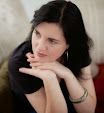
Saturday, April 10, 2010

Who's chicken?

My kids have been playing out on the street a lot lately. It’s school holidays and so all the neighbourhood kids have come out of the woodworks and spend their days kicking footballs between driveways and disappearing into each others’ houses.

This is, I know, the model of a positive childhood — the kind of our memories; the kind people spend so much time lamenting the loss of. And in theory, I’m all for it. Certainly I was one of those kids that spent my early years building BMX bike tracks in the bush (no helmets back then), or eagerly visiting the homes of kids who were allowed to watch tele and eat chocolate biscuits.

So why do I find myself thinking (and having to work so hard not to behave) like one of those uptight modern parents we all rail against? All my own issues about control — or, more specifically, the lack of it — come up in the face of having to loosen the reins on my children. And the older they get, the harder this gets.

I understand the importance of freedom, of risk, of making your own mistakes... only now, when it comes to my own kids, I find myself in a constant state of low-level anxiety about their safety. What do you do as a parent? Do you decide what you can happily live with and only let the reins out only that far? Or do you give your kids more freedom than is always completely comfortable, and take responsibility for finding a way to live with this?

Last week I had three extra kids for the day (plus mine = five). At one point, two of them wanted to play footy out the front, while three wanted to cook muffins with me. We started baking in the kitchen and I kept checking on the two outside every few minutes, which got pretty tedious after a while.

In the end I hauled them inside and let them play games on the computer so we could get on with finishing the muffins. Really, I didn’t feel so good about sticking two 8-yr-old boys who were perfectly happy playing sport outside in front of the zombie-box for my own convenience — but I just didn’t feel I could ensure their safety (boys, balls, a road...) and I was sick of trekking back and forth.

When the rest of us had stuck the muffins in the oven, another one retreated to the study. I checked on them. The computer game they were playing looked pretty innocent: little chickens chasing other little chickens or something. It was one my son had played a few times at a good friend’s house. In the scheme of things it looked quite sweet and old-fashioned. I gave them another ten minutes.

A few moments later, I had a traumatised child running to me in the kitchen, asking me if that’s really what they do to baby chickens. “What do you mean, darling?” I asked her. “Was there something in the game?” “No, we won and then there was a video of people killing baby chickens. And they were so mean to them.”

The game was part of an anti-KFC site, dressed up like a site safe for children, but on closer inspection a clever way of drawing them in and then exposing them to some horrific images. I’m all for questioning the practices of multi-national food chains; and I’m all for being honest with kids about the way animals are dealt with so they become meat for our consumption — if and when they are in a position to take this information on board. But this was a sinister and underhand way of getting at children without parental awareness.

I felt completely naive and careless. A child in my care was traumatised, all because I thought, ironically, that she would be safer in my study than out on the footpath. I know most of us use the occasional bit of television or computer time or whatever to ensure a few controlled moments of sanity — a chance to keep our child quiet and in one place while we have a shower or make that phone call or whatever.

But in this case, this decision had come back to bite me on the bum. At the risk of coming over all moralistic, if there is one area worthy of uptight parental control, it’s the internet. As for the neighbourhood adventures, I'm still trying to work that one out...

P.S. My CAE writing intensive, Making Stories: Creative Lives, is on again 1/2 May. If you are a parent and you are trying to make space for writing, this course is for you!

Thursday, March 4, 2010

Writing intensive for mothers

I am running a weekend CAE course in Melbourne on the 20/21 March called "Making Stories: Creative Lives".

It'll be lots of fun. We will look at published writing that uses motherhood as a central theme, and learn how to translate the experience of mothering into stories, articles, essays or memoir.

We will be sharing stories and articles by Helen Garner, Grace Paley, Doris Lessing, Rachel Cusk and many more who have used the experience of parenting to great effect in their work.

Please let anyone who you think may be interested know. Babes in arms are welcome, and for the rest of us I'll supply the jelly babies!

Sat 20 Mar: 10.00AM-4.30PM
Sun 21 Mar: 10.00AM-4.30PM

Venue: CAE Building A
21 Degraves St, Melbourne
Fee: $230.00 - Code: HAT54901

Thursday, February 18, 2010

More on the thorny Megan Basham argument


In response to Frances's comment on my previous post (and thank you everyone for your thoughts)...

I think it is all too easy to equate an argument against the ideas of someone like Megan Basham with devaluing motherhood.

It is exactly because I am concerned about the kind of society that I want my daughter — and my son — to inherit that Basham's ideas concern me.

It is not her assertion of the worth of being at home and involved with family that is at issue here. It is the emphasis and attitude of the argument that I find disturbing: the idea of women (and she only ever refers to women in this role) putting their energy and focus into supporting their husband’s career so he is free to earn more.

I strongly believe in a woman’s right to choose to be at home, or to have flexible working arrangements — and, just as importantly, men’s right to work-life balance and to be involved with their families.

It is the tenor of her argument that bothers me. To me, it seems this kind of theory has lost rather than gained perspective on what’s important, as the ultimate goal seems to be money, as opposed to finding ways to live well and stay connected to each other and your children. It buys into an economic system that is inherently unfriendly to work-life balance for both men and women (excuse the over-used term).

In terms of role-modelling, I want my kids to see both me and my partner focused on the things that are meaningful to us not only as parents, but as individuals — which includes loving and nurturing them, as well as nurturing ourselves and each other.

In a sense, I am the kind of woman Basham is speaking to — my partner works full-time and I work part-time. I work for money but also because I get personal satisfaction from it. I work part time because I want to be with my kids and because I can’t imagine how to keep the household running and retain some sanity otherwise.

Of course those of us who stay at home full or part time already support our families in all sorts of ways. By default, I do more washing/shopping/hands-on caring than my partner — though when he's around, he does these things too.

Every family chooses what they need to do to keep themselves functional and financially afloat.

But there are limits to this supporting role — I do not want it to take over my life, or my psyche. I don’t want to set up a dynamic that turns me into my partner’s devoted backer/servant, freeing him up to go out and conquer the world and gather more pots of gold.

After having my babies, I stayed out of the workforce as long as my family could afford for me to, and wish that could have been longer. And since then, I have been privileged enough to only need to work part-time. I breastfed both of my babies until they were 2.

I don’t think any of what I’m saying is an argument against the value of these things. I think parenting is one of the most important and complex roles any of us can have — that is exactly why I write about it so much.

In answer to your question, Damon, my ideal would be for both my partner and I to work part time, so both of us could have more time with the kids and more time to spend on our creative interests — and paid work could take its place as one, but only one, of the necessary and fulfilling aspects of our lives.

Monday, February 15, 2010

Modern Marriages of Convenience

We are in the middle of major renovations at my house right now. Unfortunately nothing fancy — more like a getting back to zero scenario (sealed walls, doors that close, upgrading the 70s mushroom brown paint, though that won’t stop me downing a few glasses of serious bubbly when it’s done).

As a result, we currently have no internet access at home. We have been spending our nights, once the kids are asleep (on the loungeroom floor), listening to the radio and painting walls. It has been strangely cosy and kind of a relief to be barred from the computer for a while.

The only downside is that I keep hearing things on the radio I’d like to comment on without the time, or easy means, to post something.

One subject I seem to keep hearing (and thinking) about is the issue of mothers judging other mothers. I am flagging that up as something I want to write about.

But more urgently—despite being about six months late on this one—I recently listened to the repeat of Megan Basham talking on RN’s Life Matters about her book, Beside Every Successful Man.

It could be seen as one of a spate of post-feminist books coming out of the US over the past decade about “modern marriages”.

You can read an article I wrote for Arena Magazine back in 2004 on this subject here.

Also, definitely listen to Monica Dux's great follow-up comments.

Basham is arguing that, since most mothers are choosing not to work full time, they may as well shift their focus on to supporting their husband’s career, as this makes economic sense all round.

Hers is the kind of conservatism that can dress itself up as pure “reasonable-ness”.

She seems flabbergasted that anyone would feel troubled by what she sees as a simple idea: the idea that you help your husband’s career so that more money is flowing in for the whole family.

We all know that statistics show most mothers of young children choose to stay at home, at least part time. This in itself is not in itself a controversial notion (though the basis for that choice can be very complex).

It is Basham’s leap to the idea of exploiting the “marriage premium”, as it’s called, that is so disturbing.

Her “supporting your husband” idea is based on “personal experience” (ie. as a woman surrounded by other women married to men with high earning capacities) and economic data that shows the presence of a “wife” at home has a positive impact on a man’s professional success and income.

The economic argument is a no-brainer. This is the division of labour that has traditionally characterised the neo-liberal economy. But at whose expense?

Hasn’t she watched Mad Men lately?

Basham quotes data that shows a man with wife at home will make 20–60% more than single man with the same job/credentials. The more hours a wife works, the smaller that marriage premium, or “advantage” becomes, she says.

She calls this teamwork.

This is surely the most expedient notion of teamwork I have ever encountered. Instead of a partnership being about individual growth and development, it’s about privileged couples milking the current system to suit their economic ends — no matter the impact on women generally.

She says women who do want to work full time and get to the highest levels should be able to, without a glass ceiling preventing her — but she doesn’t acknowledge that her argument is one of the very ideas that creates such ceilings.

It is all about encouraging an economic system that sees people get ahead by working long hours, unimpeded by family responsibilities — the very thing feminists have been trying to transform for three decades.

It is this deeper, underlying conservatism that poses the real danger for women. Along with the whole tone of the argument: men and women reverting to their most traditional roles; leading separate, if mutually serviceable, lives.

Personally I don’t want to be at home all day alone with the kids from 7am till 9pm and a husband we only see on weekends, sacrificing my own interests to his career purely so that he can make us some more money.

Is that really what life is all about? Is that the life my mother fought for me to have?

After all that, you better hope he won’t leave you for a younger model…

Sunday, January 17, 2010

Is there such a thing as women's writing?

There was the most wonderful article, “A Voice of Her Own”, by Rachel Cusk in yesterday’s Age newspaper about “women’s writing”. It is one of those pieces of writing that makes me want to shout ‘Hurrah!’ because someone has found a way to express things that I have felt in my bones but not managed to describe to myself.

I love Rachel Cusk's work. When I read her novels, I feel like every sentence is teaching me how to write. I discovered her non-fiction book, A Life’s Work: On Becoming a Mother, late in the process of compiling The Divided Heart, and it was a complete revelation to me — full of the kind of brutal honesty she advocates in the article.

At the time, her book stirred up all sorts of controversy and was vocally rejected by certain readers repelled by its rawness, or what they saw as its indulgent self-obsessiveness, just at that moment when a woman is supposed to be giving herself over without reserve. As Cusk says (somewhat obliquely): “She can find herself disowned in the very act of invoking the deepest roots of shared experience.”

I think it will take me at least two more reads of her article to fully comprehend all that she’s getting at (it is refreshingly dense for a newspaper article), but I urge you all to read it. I think it spoke to me particulary now as I have found myself in a strange state lately when it comes to writing. Not merely feeling stuck, but actually silenced, somehow, by the realities of life.

Funnily, this state descended on me following a period where I was writing furiously, and now I find myself having to not resist, but just wait for the emptiness I've been feeling to once again be invaded with words.

What strikes me in Cusk's discussion of women’s historical “silence" is the idea that it may not always have been characterised by conscious frustration, but rather by the dominance of a culture that makes a woman unknowable to herself, that bars a woman from realising herself.

There was a gap in what women were able to imagine and their lack of “wordly power” to enact it, she writes. “Yes, she might produce literature out of this conflict in her being. But she is more likely to produce silence.”

She describes a Doris Lessing story about a mother of four who begins to want a room of her own. She doesn’t know why she wants it or what she wants it for, but the desire for a space where “no one can get at her” becomes an obsession. A designated room in the house doesn’t work: the kids can still find her there. So she regularly starts renting out a room in a hotel.

Cusk’s point is that the woman in the story doesn’t go to this room to write bestselling novels. Or to create anything at all. Perhaps the most powerful “women’s writing”, she is saying, is that which describes its opposite: women’s silence; the experience of someone who does not have the means to articulate the source of her own restlessness to herself.

When I read Cusk’s A Life’s Work, I remember finding it intriguing that she didn’t specifically identify herself as a writer, or suggest that a lack of time for writing might be a central cause of her frustrations as a new mother. At the time I saw it as a kind of oversight, especially coming from someone with such keen self-knowledge.

With this article, though, I see it was possibly deliberate. A way of universalising her experience for the reader, but also trying to get at what is, in actuality, a more general sense of confusion about what it is and means to be a woman feeling the “integrity of her life” suddenly at risk.

For contemporary women, “Marriage, motherhood and domesticity are regarded as so many choices, about which there is a limited entitlement to complain,” she writes in her article. In other words, now that we are equal, superficially at least, we are also successfully disenfranchised. As women, we no longer have a powerful, unified movement to join when we find ourselves thrust into situations that make us realise our lives are, after all, still defined by the fact of being a woman. All the more shocking for modern women who have convinced themselves of their equality, and fiercely protect this belief.

Cusk’s idea that this might be the reason for a writer to “risk taking femaleness and female values as her subject”, could entirely describe my own impetus for writing The Divided Heart.

As she says, it is the work that deals in the eternal — motherhood, domesticity, family life — that the most honesty is needed, and that you can expect the strongest rejection, because so many women don’t want to return to these questions, or admit that their lives might be affected by them, or lose some of what they feel they have gained from effective assimilation.

I have a dear friend (one of five siblings) who tells a story about watching some video footage of her family and suddenly being struck by what their lives have meant for their mother. She turned to her and said, “But Mum, we’ve ruined you!”

Her mother’s answer: “Yes, but what a way to be ruined!”

When it comes to thinking about the "integrity" of my own life, this anecdote often comes to my mind.

Monday, December 28, 2009

Where's Santa when you need him?!


Phew! I barely survived that Christmas period--I don't know about you. The Santa fantasy must have been invented by desperate parents who never want to enter another shopping mall again as long as they live. Imagine how much more relaxing (and affordable) Christmas would be if Mr Santa Clause could only keep up his end of the bargain...

All that fluoro lighting seems to have killed off my brain. So luckily for me (and you), rather than write a lengthy post here, I can refer you to this piece philosopher Damon Young invited me to write for his fabulous blog series in which authors and artists talk about their favourite tools...

Thursday, December 3, 2009

A poem from Cate Kennedy to share


I seem to be constantly apologising lately for my lack of blogging action. This week, though I have a particularly good excuse, as I am doing an intensive novel writing masterclass--which, as it suggests, intensive!

It has been a rather humbling, daunting, confronting experience spending all day in a room full of accomplished fiction writers, when I feel like such a beginner, still trying to make the transition out of non-fiction and into fiction--and not just short stories, but a whole book. It has felt a bit like vomiting in public sometimes, sharing this very raw material so openly. (Sorry--that's not a very pretty picture, is it?)

What has really helped my (numerous) crises of confidence, though, has been the number of amazing messages I have been getting about The Divided Heart this week. I think this book must have just about the loveliest bunch of readers any book could hope for! I so appreciate the openness and generosity of spirit with which people write to me. Thank you Divided Hearties.

In the meantime, I just want to share this wonderful poem that writer Cate Kennedy (speaking of the wildly accomplished) sent me some time back after reading The Divided Heart.

I was sitting at my desk wrestling with a piece of writing one day, when up popped a message from Cate (that's her in the pic above), with this poem that summed up so exquisitely the very feeling I was struggling to articulate: the way children call on us/teach us to be present to the here and now--which is what is both so challenging and so wonderful about them. It was one of those synchronous moments.

Cate was one of the first women I approached for an interview for my book, only to discover she didn't then have children. (I felt mortified that I had been so presumptuous. Something about her writing had made me assume she was a mother.) She has since had a daughter, and now I wish I could do a second version with her in it!

(P.S. Just before you read the poem--for those still thinking/blogging/obsessing about housework issues, my sister has started a new blog, Work, Love, Play, and her latest post offers another interesting angle on the matter...)

THE ZEN MASTER
Cate Kennedy

I have written this
with a body stretched and sore,
stitches swollen, torn by a crowning head
tongue thick with painkillers
and in the next room a cry for milk
to set my heart off like a caged bird against my ribs

And I have written this
dragging with me a lead apron of grainy exhaustion
page prickling through a stinging mist, mouth metallic with adrenalin
while she sleeps, frowning, tender as a camellia

I have written
all I could, in a gluttonous scrawling haste
hearing her call for me, crawling through the other room
written it washed with guilt, the soup burned to the saucepan
snatching just five illicit minutes to myself, for godsakes, just five

And I have written
as she sat under my feet pulling what’s hoarded from the shelf below
cringing at the sound of tearing paper
until the computer connection suddenly went dead
and she – gummy, triumphant, seated like the Buddha –
held the cable aloft, and waved it like a prayer flag

And I have written, like today,
as she stood by my leg crying with frustration
beating a tattoo onto my thigh with both hands
her face transposing everything, urgently seeking my eyes
demanding I turn away from this pointless thing
because out there, the whole humming world is waiting
See, says her fervent outstretched finger, see there
is the outside
trust me
everything you need is there

tell me you wouldn’t rise,
given that call,
and follow her
helpless and ardent
as a chastened disciple.