You may remember that a while back I wrote a post about a new documentary Lost in Living, being made by filmmaker Mary Trunk about "the messy intersection of motherhood and artistic expression".
It never ceases to amaze me how universal the feelings are when it comes to the dilemmas women feel about combining their own creative needs and the needs of their children.
Like my approach with The Divided Heart, Mary took her own fears and confusion and sought out other women who might be feeling the same way. If you watch the trailer on her website (or below), you can already see what a powerful and touching film it's going to be.
In a lovely post Mary has just written about my book, she writes that because "Rachel was willing to be open herself, the women she interviewed opened up as well." Though we don't see Mary on camera, it's clear that the very same is true of her. Her subjects really let her in and, as a result, the footage is heartwarming and heartbreaking in equal measure.
Mary now has a rough cut of her film ready and she has launched a Kickstarter Campaign to raise the funds she needs to complete and promote her film. She needs backers, and every dollar counts. But all forms of support are welcome, whether it be a blog post or just a "like" on the film's facebook page.
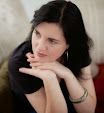
And while I'm promoting amazing women, the link between Mary and I was British-born New Zealand photographer Parisa Taghizadeh, who contacted me after she read The Divided Heart.
One of her recent projects is a series of portraits of women without their children, simply titled MOTHER.
Each image is a celebration of the individuality that, as she puts it, "gets pushed to the side and ignored after we take on our new role as mothers". It is astounding how potent and layered a seemingly straightforward portrait shot can be when you've added the label "mother", which has such strong cultural and personal connotations.
As I've just told Parisa, I've always been quietly fascinated with the question of whether you can tell if a woman has children just by looking at her. I can sometimes be a bit conceited in my belief that I can tell -- but have regularly been proven wrong!
Looking at her portraits, I was also reminded of how in those early days of parenting I so often longed to be alone, and then when I (rarely) was, I immediately wanted to let everyone I passed know that I was a mother. It had become such a strong point of pride and identity -- one I was more attached to that than I had realised.
Saturday, August 25, 2012


Monday, July 2, 2012
Education: the case for equity over elitism
I wrote a piece for the MamaMia website, up today, about the future of education funding in Australia.
To me, it makes sense on every front to throw as much money as possible into giving all kids access to a top-notch education at their local school.
I find it particularly frustrating to see the campaign for greater education funding constantly sidelined by the debate about private versus public education.
This shouldn’t be about where you choose to educate your own kids. This is about equity and trying to do all we can to give every child a fighting chance at maximising their potential, no matter their background or the size of their parents' wallet.
In constantly banging on about "choice", we forget that choice is still a luxury for most. Does that mean kids from poorer families are less deserving of high-quality teaching and facilities?
At the end of the day, this is also about the kind of culture and community we want to create and be part of: one where we care about everyone's right to a great education, or one that urges individual families to "buy" their kids "the best". What would you prefer?
The Gonski Review has recommended a comprehensive change to the way our schools are
funded — directing money toward those with the greatest need — and
called for an extra $5 billion to be injected into schools as a matter
of urgency.
But so far the Gillard Government has failed to act.
As parents, we have a potent stake in the future and the power to push for change on behalf of all kids. If this all makes sense to you, please register your support at I Give a Gonski.
To me, it makes sense on every front to throw as much money as possible into giving all kids access to a top-notch education at their local school.
I find it particularly frustrating to see the campaign for greater education funding constantly sidelined by the debate about private versus public education.
This shouldn’t be about where you choose to educate your own kids. This is about equity and trying to do all we can to give every child a fighting chance at maximising their potential, no matter their background or the size of their parents' wallet.
In constantly banging on about "choice", we forget that choice is still a luxury for most. Does that mean kids from poorer families are less deserving of high-quality teaching and facilities?
At the end of the day, this is also about the kind of culture and community we want to create and be part of: one where we care about everyone's right to a great education, or one that urges individual families to "buy" their kids "the best". What would you prefer?
But so far the Gillard Government has failed to act.
As parents, we have a potent stake in the future and the power to push for change on behalf of all kids. If this all makes sense to you, please register your support at I Give a Gonski.
Thursday, May 17, 2012
Life and time...

If only time wasn't so finite. I wish I felt time was less my enemy and more my friend! But as it is, I feel that with every project or activity I turn my energy towards, I'm forced to let a whole lot of equally meaningful things slide.
But certain things trump all else. And for me lately this has been the needs of my beautiful daughter.
People have always described my daughter as special. She is a dreamer, with large eyes and a tendency to stare, which draw people in. But now I look back and realise that when people called her "special" they might have been seeing more than they, or I, knew.
In the past year or so I have entered this whole new territory of having a "special-needs" child. My little girl's issues are mild compared to many, but they still require huge amounts of time and energy from my partner and I to help keep her engaged with learning.
It's all been a bit of a shock, admittedly, after having a son who seems to just soak up information by osmosis through the pores of his skin.
Anyway, to cut a long story short, that's where I've been. But I haven't finished with this darn blogging business yet. And in the meantime, I came up with some answers to some lovely questions from artist, blogger and all-round creative Jodi Wiley.
You can read them on her blog, Art by Wiley, where you can also see a really bad photo of a drawing I did of my son with me and my messy bedroom perfectly reflected in the glass! That's got to be a metaphor for something...
Sunday, April 15, 2012
It's BIG and it's beautiful

How exciting to arrive home on Friday afternoon and see this stuffed into my letterbox.
The second issue of 'BIG Kids Magazine' is out now.
I don't know how they do it, but they do... Brilliantly so.
Tuesday, March 27, 2012
Che & Fidel's Divided Heart

I have been a bit distracted of late, so apologies for the lack of posts.
But while I work my way up to writing the next "real" post, I just thought I'd direct you across to Jodi Wilson's wonderful blog, Che & Fidel. (You probably already know it!)
Jodi has been sweet enough to feature The Divided Heart on her blog this week, and run an interview she conducted with me, all about arting and mothering.
She also has one copy of The Divided Heart to give away -- though the comp ends tomorrow (March 28th), so quick, run don't walk! All you need to do is become a follower of Che & Fidel and leave a comment with your name and email address.
Sorry not to let you know earlier, but you know me... always late.
Tuesday, February 28, 2012
Lost in Living: A new doco about art and motherhood
 Yesterday I got one of those messages in my inbox that makes your heart skip a little beat.
It was a message from American filmmaker Mary Trunk, telling me that my book, The Divided Heart, played a part in helping her develop her now almost completed documentary feature, Lost In Living, which tracks the lives of four women artists.
To cut a long story short, I'll share her words below:
I have spent the last seven years following four mothers who are artists. Two of them I met when they were pregnant (they also happen to be best friends) and the other two are older and have adult children. During this long and fascinating process I was given your book "The Divided Heart", which I found so powerful and moving. I have since been following your blog, which I thoroughly enjoy. Your book is incredibly inspiring and insightful. It helped me figure out the approach to my film, the interview questions over the seven years I documented these women and confirmed that I wasn't completely crazy to make a film about this topic. Thank you!
Going by the initial footage she has released, it is clear that Mary has captured something very raw and honest in her subjects -- with regards to art and mothering, but also female friendship.
As I have since told her, it never ceases to amaze me how common the issues are for women artists -- how the same feelings get expressed time and again, often with the exact same words. I also fully relate to her fear that it might be crazy to document this topic, when so many people tell you it's just a "niche" subject without any great import for the world at large.
It is humbling to know that The Divided Heart has reached the other side of the world and played even a small part in Mary's film.
As she continues through post-production, she is posting short clips on YouTube and her blog, touching on subjects like "What's so great about creativity?" or "Baby and sacrifice: what do you give up?".
I will endeavour to keep you posted about possible screenings of "Lost in Living" here in Australia. Till then, you can watch an extended trailer below:
Friday, February 24, 2012
Badinter strikes again (this time in English)

Here I am, late again. I've no doubt the blogosphere went mental for a while there when the English translation of French feminist Elisabeth Badinter's book, The Conflict: Woman and Mother, was released here last month.
I'm afraid it mostly passed me by this time around, but I did read this very succinct review from Ruth Quibell in the Fairfax press, who does a great job of summing up a very complex book.
Whatever you think of Badinter's ideas, there's nothing like having a strong, provocative second-wave feminist saying it like she sees it to force us modern feminists to define our own thinking.
Every generation shapes itself in response to the previous one, and it's clear that younger women (meaning women in their 30s and 40s now) have felt the need to reassert the value of mothering.
The question is, in doing this, have we risked losing ourselves all over again, or have we reached a better balance in terms of where we want to put our energies?
I have seen a lot of responses from women agreeing with Badinter that they feel burdened by notions of the "perfect mother". It's true that mothers can be their own (and each other's) worst enemies, with our excessive judgements and our guilt and our intense fears for our children.
But I fear Badinter has all the wrong targets in her sight, particularly the "breast-feeding zealots" and "muesli-crunching ecologists" she blames for driving women back into the home.
Modern women no longer operate with the either/or mentality when it comes to work and family. Most of us are undertaking some combination of paid/unpaid work and parenting, amid our other roles as friends, partners and carers.
No, that doesn't mean we have reached a perfect balance. Women are arguably more stretched, and stressed, than ever. But I think few would blame breastfeeding, co-sleeping and the use of cloth nappies for that.
In fact, rather than being duped by the values of so-called “natural” mothering, as Badinter argues, I'd say women who are making conscious choices about their parenting methods tend to be among the most politically conscious and active people in our communities — in ways that extend well beyond mothering.
For Badinter’s generation, baby formula and disposable nappies might have proven liberating. But younger mothers are engaged with the bigger picture. Petrol-fueled cars have been pretty liberating too; but is that a good enough argument for their continued use into the future?
I've always felt that mothers have the potential to be a powerful political force on the issue of climate change. Who has a greater stake in the future of this planet than the women who are giving birth to the next generation?
Second-wave feminism had good reasons for focusing on women's right to equality in the workplace. And we know the fight for equal pay's not over yet.
But isn't the ultimate goal of realising workplace rights to give women — and ideally men, too — greater choices about their lives? Is it really that surprising that many educated mothers are now making the active choice to stay at home or work part time when their children are small?
The great achievement of feminism is that Western women, speaking generally, no longer feel that becoming a mother is their sole biological destiny, or that as a mother they will be defined primarily by that role.
That doesn't mean that, in having children, women don't discover that being a mother is a meaningful aspect of their identity — for good reasons, as motherhood can be genuinely transformative. The love we feel for our kids isn't inherently oppressive; it can also be a force for change and empowerment on all sorts of fronts.
Badinter's argument that "it remains difficult to reconcile increasingly burdensome maternal responsibilities with personal fullfilment" -- while true for many mothers -- ignores the fact that the two are not always mutually exclusive.
When talking about women's interests, I always feel there is a strong need to separate out the mothering of children and the associated demands of running a household.
In targeting children as the "tyrants" holding women back, Badinter lets the real culprits off the hook: the lack of economic policies supporting real choices for women through access to equal pay, superannuation and quality part-time work, all of which compounds the unequal division of labour in the home.
After all, the years spent breast-feeding, co-sleeping and changing nappies are a mere blip — albeit, a pretty special blip, in my book — in the course of a woman's life.
Subscribe to:
Posts (Atom)