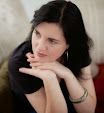
A member of my writing group, Peggy Frew, is about to publish her first novel, House of Sticks (Scribe), which won the 2010 Premier's Award for an Unpublished Manuscript. I have known for years that Peggy is a writer to watch, and so it's very exciting to see her getting the attention she deserves -- and this is just the beginning...
If you read this blog because you are interested in mothering and art, then you have to read House of Sticks, a novel that wades into this territory with great insight and honesty. And if you want to know more about Peggy and her work, look out for my profile piece in an upcoming edition of The Big Issue (September).
 For a taste of just what a brilliant writer Peggy is, you can read one of her short stories in the current fiction edition of The Big Issue magazine. I got hold of a copy yesterday at the Melbourne Writers Festival, and (from what I've read so far) it's packed with great stories.
Without wanting to steal the article's thunder, there were some chunks of the interview I did with Peggy that didn't make the final cut. Inevitably we spoke about writing and motherhood in detail that might leave the average reader cold, so much of that got left out of the article. Instead, you can read those bits here:
 What Peggy Frew said:
Somebody who read the book, a published author themselves, wrote me this email saying writing any novel takes such determination and dogged hard work but, in the case of House of Sticks, it also takes courage.
It's not like it's a memoir where it's all about the bravado of exposing your own dark life or something. I think people think it's brave because ... it's taking a subject that a lot of people wouldn't think is worth writing about. It was what I was compelled to write about; I didn’t think strategically at all. You do connect with what's going on at your life at the time. I didn't set out to be brave or controversial; I just wrote it because the characters and the scenario came to me.
Almost everybody lives in a home, a lot of people have children, so how can it not be a valid subject to write about? Family is a key matter for a lot of writers. But it's the mother and baby thing that mean people put it in that pigeonhole. Now I'm a bit worried it's not going to be taken seriously because it's "only" about motherhood. Fortunately, my next book is far removed from that.
The initial urge [to write] is really unfocused usually. It's almost like a bodily urge, really, like a need to eat or something. But with working on a novel then it very quickly moves beyond that and it actually becomes a slog; I have to shape that initial outpouring into something. And then you have to commit to it and it becomes a task that you don't necessarily feel compelled to do at all. It's like that Dorothy Parker quote: "I hate writing, but I love having written."
If the book's there and you want to write it, you have to. There is definitely room to be a mother and make art. The main reason for me to keep writing is that I’d be a less happy person if I wasn't and therefore a worse mother.
Once you've had a child, you have to live with a sense of responsibility and therefore hope. You can’t just be selfish and you can't just give up on the world. It hasn't stopped me from confronting horrors, but my children are still really young. I haven’t had to justify anything about what I’m doing yet.
I recently read The Slap, and there’s this really great bit in that where a character talks about a friend who has this theory that there are three genders: men, women who have had children, and women without children. So men stay the same, while women are almost two different species. I thought that was really interesting. Though I think having children does change men as well.
I heard an American author on [Radio National's] The Book Show and he was a doctor who had become a writer of fiction and he talked a lot about working in hospitals. In the middle of this interview that was quite kind of high-brow, he said, "I feel like there's one thing that changes your life and that's having children. I feel like that's changed me profoundly and I'll never see the world the same way again." It was almost jarring when he said it. I totally didn't expect him to say something like that because men so rarely mention those things.
 I’ve never had anything but support from my family. I think the fact that Mick [Turner, Peggy's partner] is a painter and musician himself means that he has respect for art and he understands that what you produce -- of course it's tied to you and who you are. And there are elements to that book that are based on real experiences and real feelings. But I think probably because he's done it himself, Mick understands that when you take real experience and make it into art, you do fictionalise it. You take a moment in which you felt a particular way, and you inflate it and heighten the drama, and explode it out into a huge story. There's a kernel of truth that relates to your real life, but it doesn't mean that the big story is real life. I think he just gets that. Well, fingers crossed he does, because we could be in big trouble otherwise.
We're both really productive. I imagine it would be really rough if one of you was going great guns and the other was dealing with writer's block or whatever. But we haven't had to deal with that yet.
In the book, [main character] Bonnie idealises Mickey [a musician and free spirit]. She is Bonnie's opposite. She's the living myth. It doesn't matter who you are, everyone has someone like that in their life, the people you idealise. I know I do with other mothers. In the school playground you see those other mothers who look really relaxed and calm and their like life is together and they're really well dressed and their kids seem really well behaved. You feel like they're somehow living this other life.
Parenting's like anything else — some people are just really good at it. My biggest issue as parent is containing my own frustration.
I've got one day a week [to write]. Otherwise, I write in small spurts — evenings, maybe twenty minutes in an afternoon if [third child] Fraser goes to sleep. And on the weekend I might lock myself in a room for an hour.
When I went on that writers' retreat I had six whole days and I wrote about 7000 words. That's comparable to what I’d write at home if I was really in to something and writing every night. It was just that [at the retreat] I had lots of time to go on walks in between and I felt really refreshed and relaxed, but the actual output that wasn't that different.
I’ve been so much more productive since I had children than I was before, but that could just be a maturity thing. ... I was really lost in my twenties. It [having a family] has worked really well for me. I wouldn't change anything at the moment about my writing practice. Actually, I would change something: I would love to have, say, two hours every mid-morning when I just went in to my study alone. But I wouldn't want to go into an office every day and write all day.